article > journal
Haeparang Trail Courses 1–10 Trekking Journal
I walked 162km along Korea’s east coast over 10 days.
I got two weeks of vacation from the company for my 3-year work anniversary. I decided to finally do something I’d wanted to try for a while: trekking the Haeparang Trail. The Haeparang Trail is a 750km walking route that follows the east coast from Busan all the way up to Goseong in Gangwon-do. I planned to walk Courses 1 through 10 alone, one course per day, over 10 days.
Two full weeks off was… not ideal. Was it even possible to take 10 business days off? Probably not. This year’s company schedule and the work itself were heavy and dense—every stretch of time felt important to me, and important to the company too. I was convinced there was no way I could carve out two weeks.
And yet, at some point, I picked a time and decided to go. Looking back, there was never going to be a “good” time to use this vacation. There wasn’t a season where it felt safe. I just had to use it, and I just had to go.
Because this vacation comes only once every three years, I treated it like I should spend a lot of money and time and go as far as possible and do everything I could. But mentally, I wasn’t doing great. I felt like I’d been force-feeding myself the world’s changes without a break—overstuffed, barely carrying what I could handle, tired, with a folded-up heart collecting small bruises.
I wanted to sort through those things, unfold them, and press them flat. I thought it would be good to talk to no one, hear nothing, see nothing, think a lot, and build a routine completely different from my usual life. So I decided to go to the sea and walk for a long time.
Haeparang Trail Course 1 (Busan, Nam-gu, 16.9km)
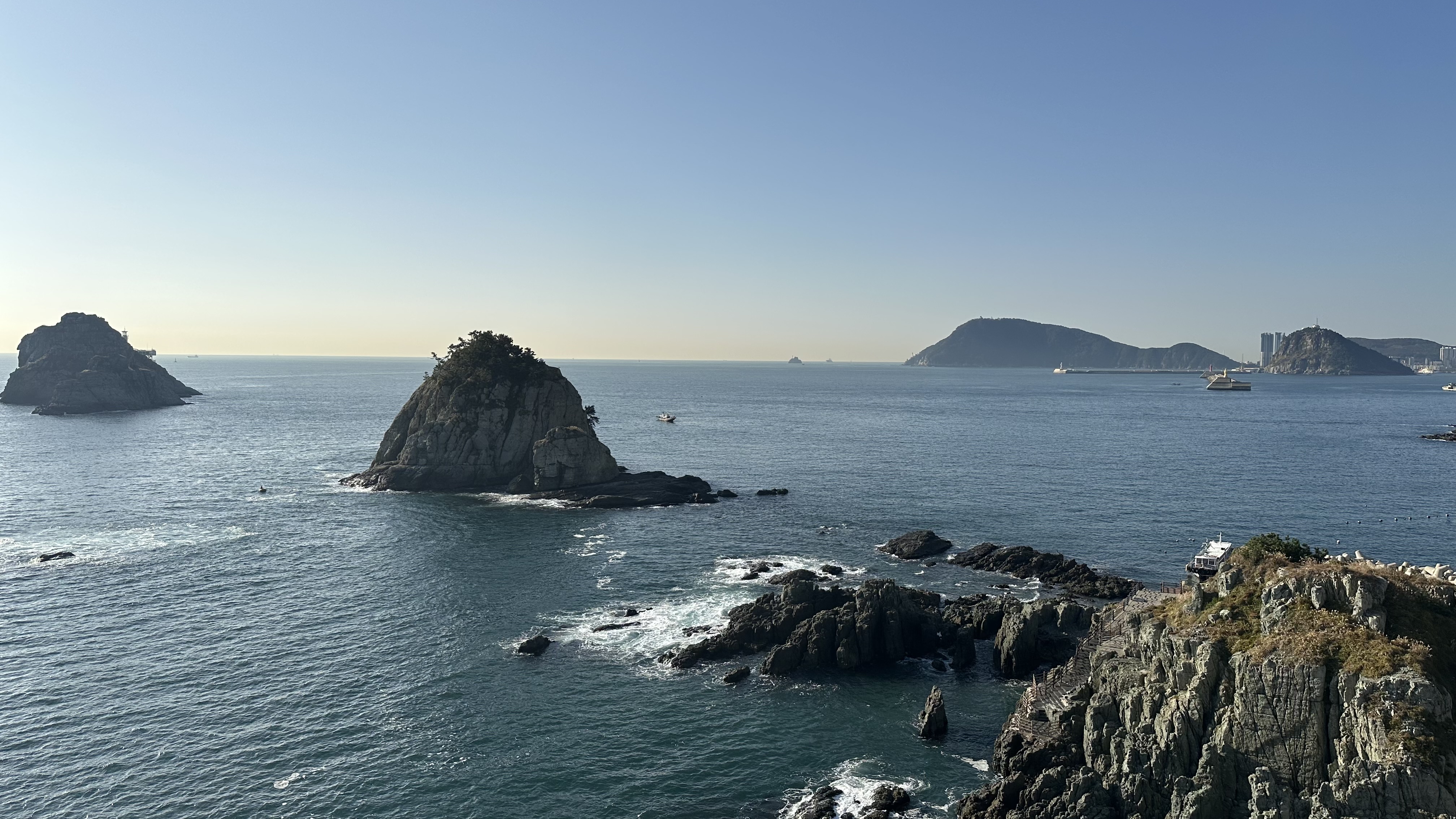
On the coast of Igidae Park, my mind still couldn’t settle. Under the blazing sun, I could feel the thick, muscular force of the waves trying to carve down massive rocks. I sat on the sand looking out at Gwangalli. Watching sea after sea, sitting on the ground and spacing out, starts to become a habit.
Because of the first night’s lodging, I walked halfway into Course 2 as well—23km total—and my soles hurt, and I got blisters. From that day on, I started taking blister care seriously with blister tape and the like. I learned how to stick the tape on and just pull my socks right over it.
Haeparang Trail Course 2 (Busan, Haeundae-gu, 14km)
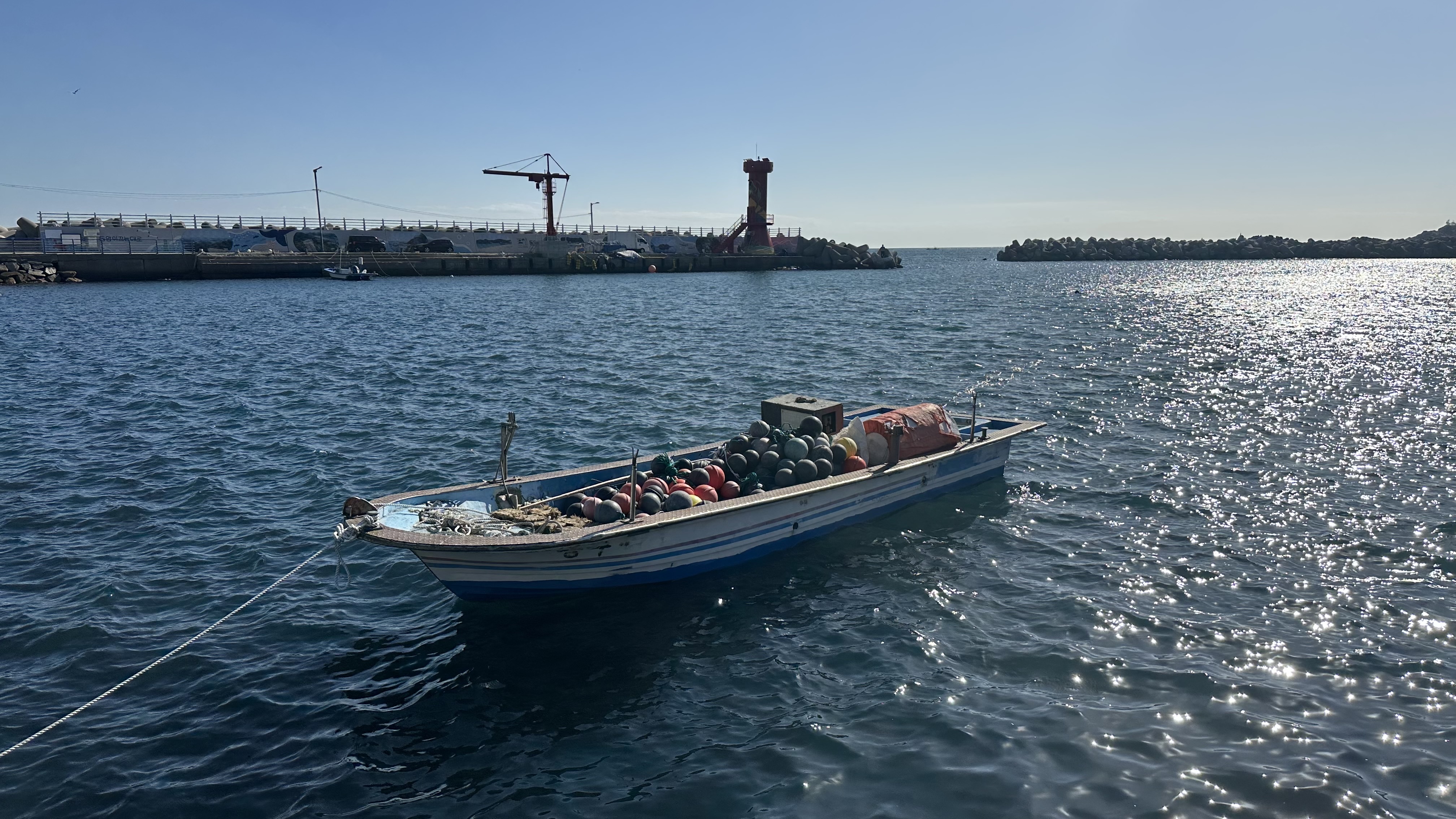
I started the day in front of Songjeong Beach. It was my first time seeing Busan’s sea outside of Haeundae and Gwangalli. I’ve been looking at the ocean all day since yesterday. The trail markings are so well done that I kept wondering: who set all of this up, and how?
For two days, I ate three meals of dwaeji-gukbap (pork soup and rice). Until then, the only version I’d tried was the tourist-style one—clear broth with just sliced pork. I was really curious about the old-school local kind. A slightly yellow, thick broth; that unmistakable pork smell. I got to experience it. It felt like the innards were mostly osori-gamtu (a specific cut of pork offal), which was pretty different from the Jeolla-style version I’d had most often, and that was refreshing.
Daebyeon Port has a big haenyeo (female diver) village, and instead of sashimi, there are stalls that sell only seafood like abalone, sea squirt, sea cucumber, and so on—almost like a market row of stands. I wanted to try at least one of abalone porridge, anchovy sashimi salad, or anchovy ssambap, but it’s basically a rule that you order for two people, so I had to give up.
Haeparang Trail Course 3 (Busan, Gijang-gun, 16.7km)
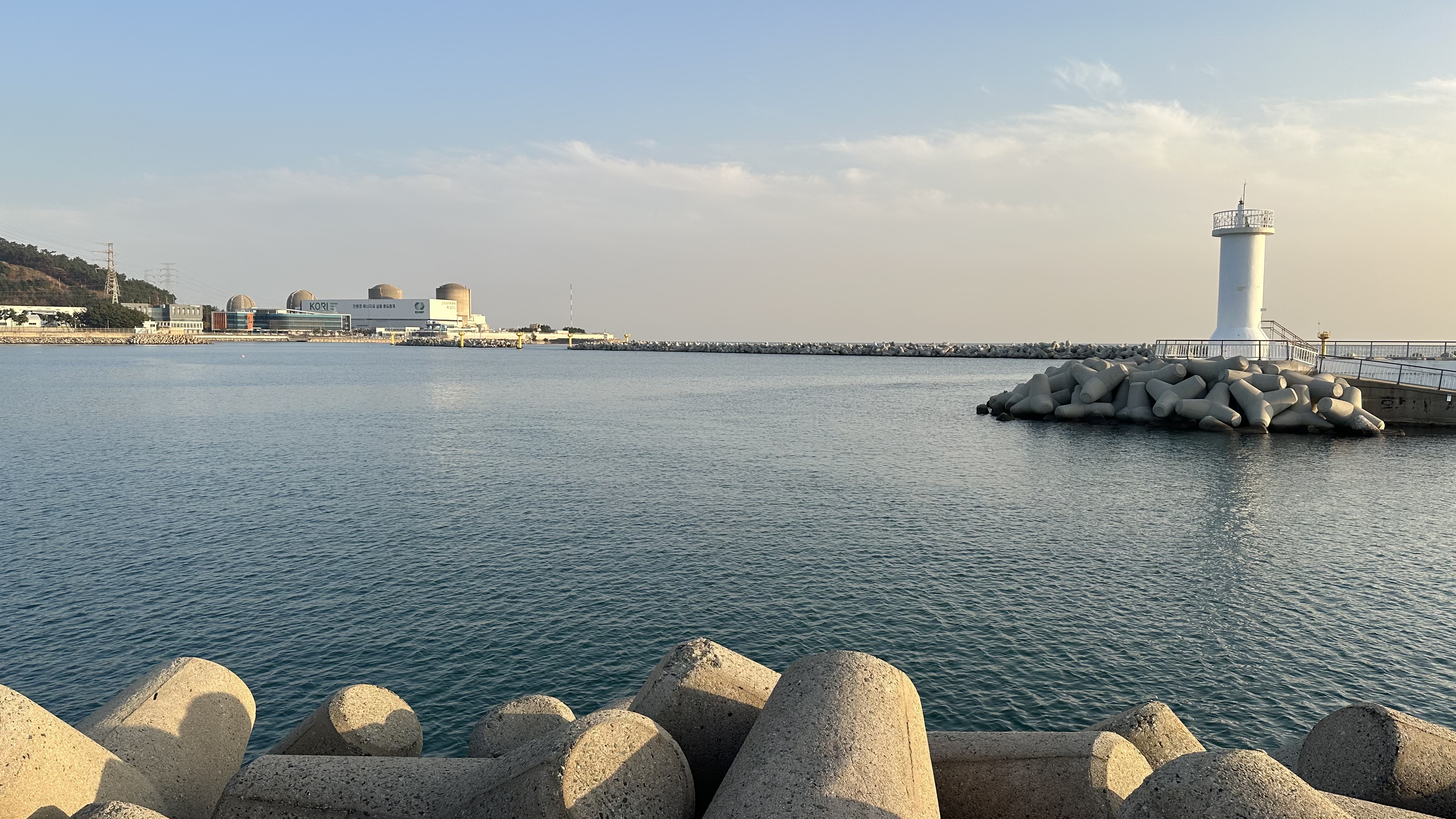
From the morning, the Haeparang Trail sent me into the mountains. The markings led straight into endless steep slopes, and I wanted to beg for mercy. Bongdaesan had an incredible number of burial mounds—I figured it must have long been seen as a common burial place for people in nearby villages. It was really hard to tell whether they were actual graves, symbolic mounds, or relocated ones.
Because I was walking every day, recovery after walking became extremely important. After finishing a day’s walk, I tried to avoid walking as much as possible: eat dinner, check into a motel, hand-wash clothes, replenish electrolytes, read a bit, then sleep for 8+ hours. Burning over 1,000 calories a day makes you sensitive to the feeling of stamina being used up and restored. It felt like an RPG character, like there’s a health bar floating above my head—walking drains it, sitting still or eating fills it back up. The sensation becomes vividly physical.
Haeparang Trail Course 4 (Ulsan, Ulju-gun, 18.8km)
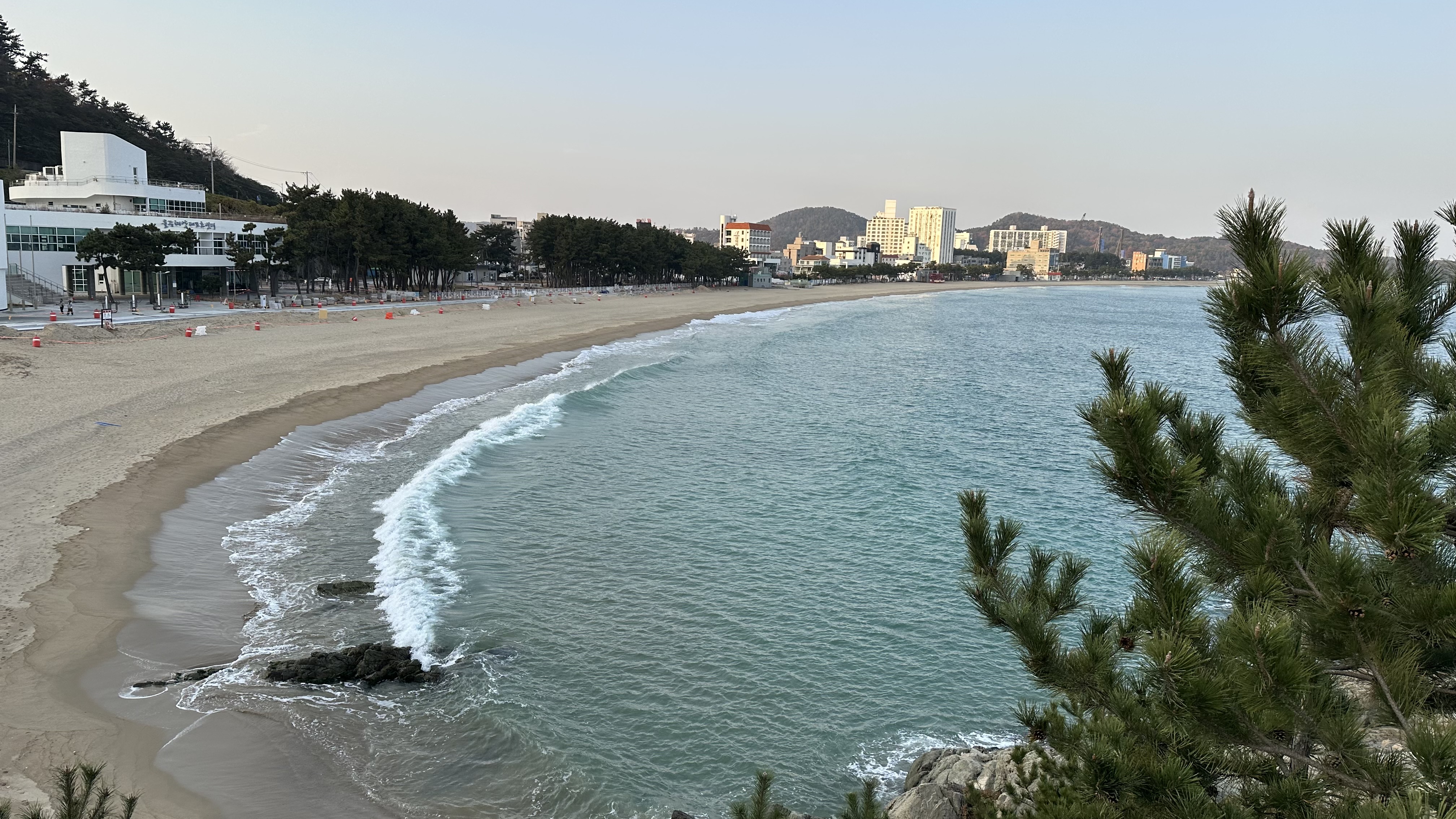
I crossed the boundary from Busan into Ulsan. I stopped by Ganjeolgot. On the back of a big stone marker that says “Ganjeolgot,” there was a line that went something like: “Those who come here and their descendants will prosper forever in the new millennium.” Another marker said: “Ganjeolgot, Seosaeng-myeon, Ulju-gun is the place where the sun rises first on the Korean Peninsula and the Eurasian continent on the first day of the new millennium.” That kind of story probably explains the intense energy of people who come here for sunrise.
I’d been carrying detergent in a container and hand-washing for three days straight. Near Jinha Beach there was a laundromat, so I finally ran everything through a washing machine—and it was unbelievably comfortable. Doing laundry with a washing machine is happiness.
Around Jinha Beach there were lots of restaurants and motels for tourists, and also a lot of on-site construction workers who were staying and eating near the big apartment construction projects. The dinner spot felt like a real canteen, and I ate among older guys. I think I don’t get attached easily to towns that feel like they have more people passing through than people staying.
Haeparang Trail Course 5 (Ulsan, Ulju-gun, 17.6km)
I stopped in Onsan-eup—basically the starting point of Ulsan’s national industrial complex—and ate a meal there. After seeing mostly rural towns, suddenly there was a real city area: apartments, schools, big restaurants. It was the first place where I felt the power of an industrial complex that can actually hold up people’s lives.
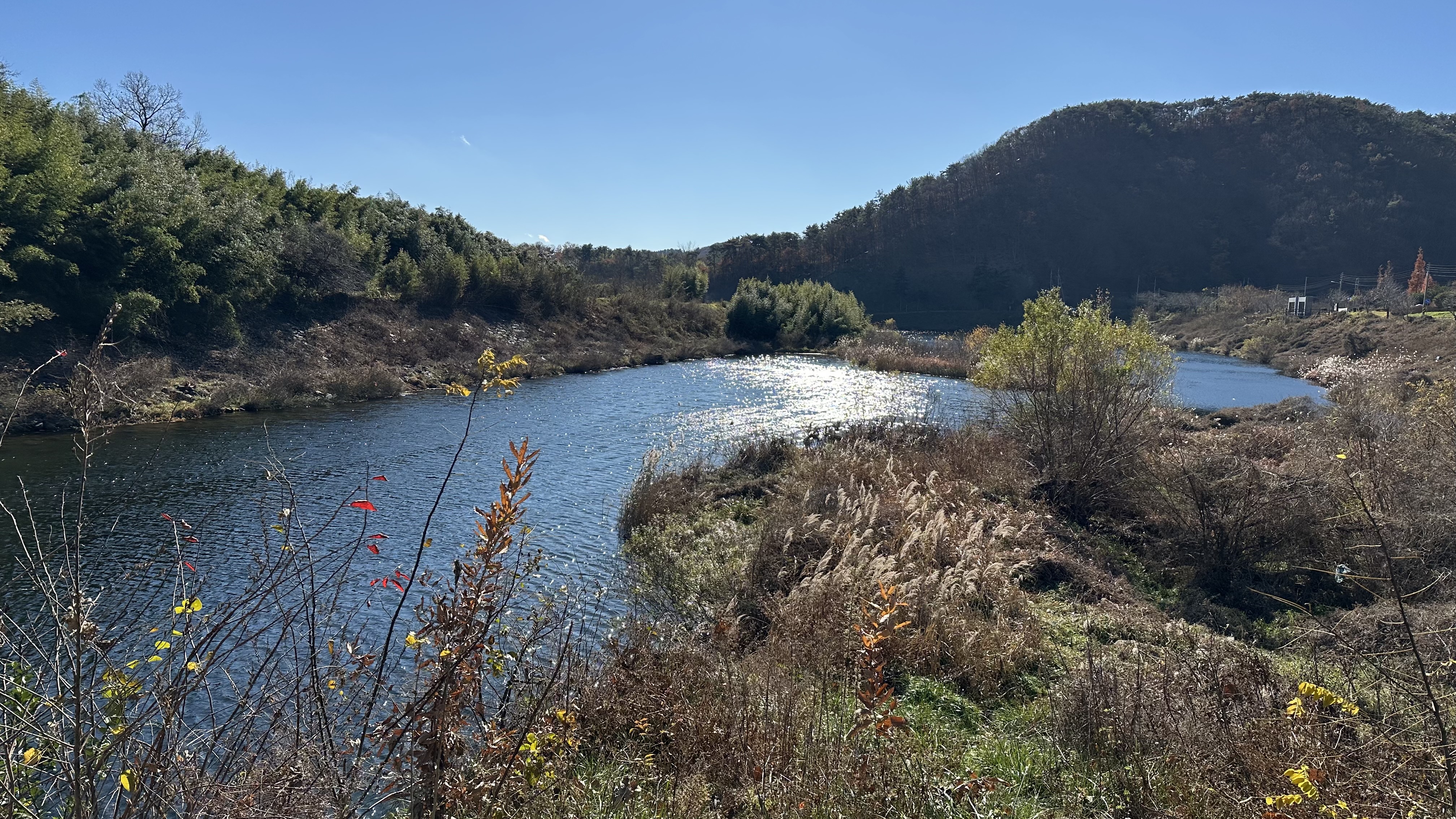
The Hoeya River cutting through Ulju-gun was one of the most beautiful landscapes on the entire trek. It felt like nature was well preserved, like human hands hadn’t reached it much. Seeing something that beautiful alone made me sad. I arrived at a thought: I don’t want to do fun things alone anymore. I don’t want to be the only one happy. I want to do things like this with someone.
Around then, I heard Seoul had gotten a cold wave and snow. Gyeongsang-do was getting colder too, but it was still staying above freezing. There were days when it went up to 18°C during the trek—being down south really is warmer.
Haeparang Trail Course 6 (Ulsan, Nam-gu, 15.7km)
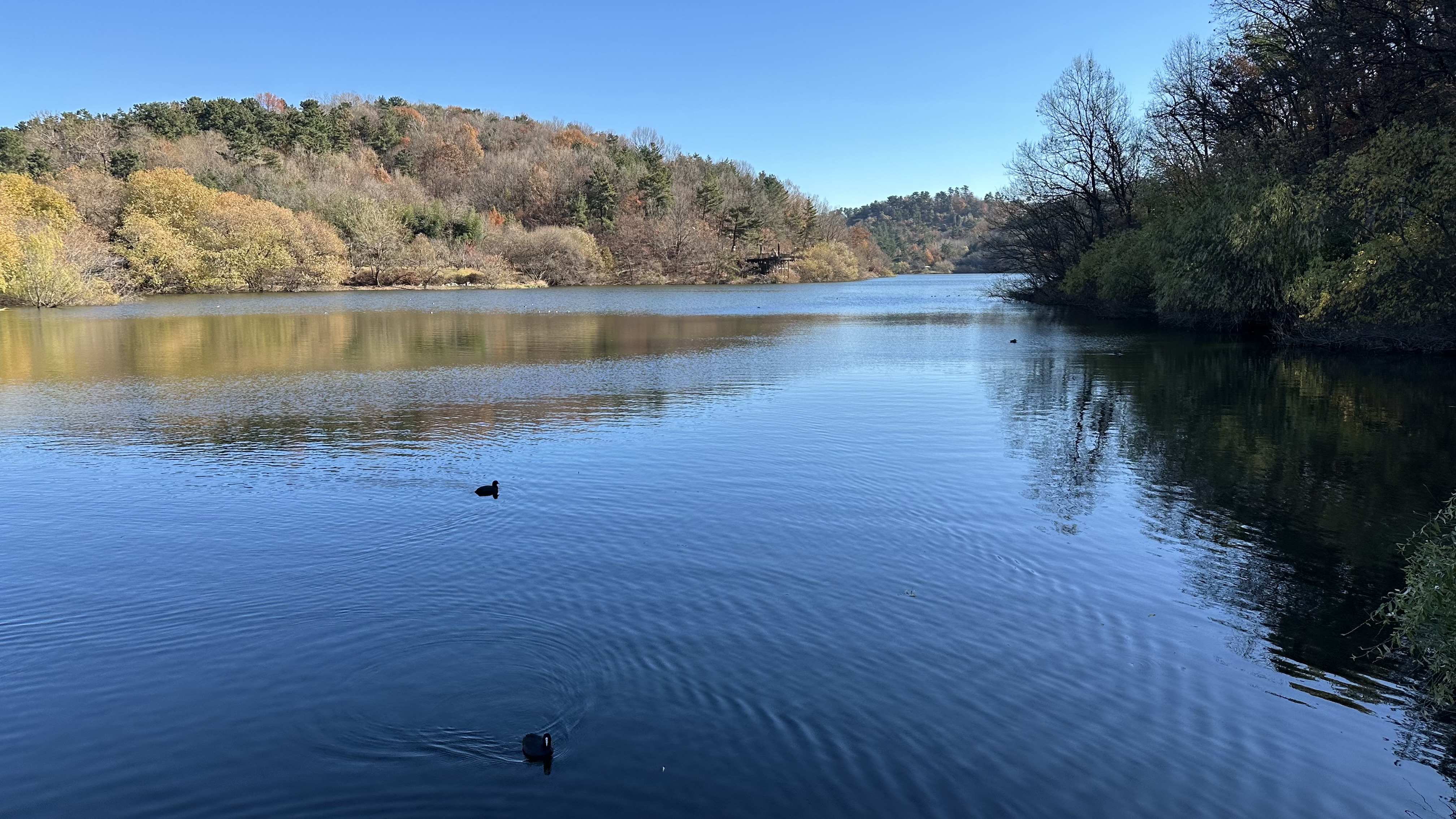
The hardest course out of the ten. You have to climb over three mountains around 200m above sea level. Ulsan Grand Park has dolphin-shaped trail lights that also act as markers, and later, just looking at them made me feel like throwing up. I wanted to ignore the Haeparang arrows and take the flat path in the opposite direction so badly I didn’t know what to do. I burned 1,600 calories that day.
While walking, I didn’t listen to anything—not music, not podcasts, nothing. In Seoul I always have my earphones in while moving, and if I did that here, I wouldn’t actually be stepping out of my usual routine. By listening to nothing, I could focus more on the physical changes and the thoughts that were happening inside me while I walked.
Sometimes, when I turn around mid-walk and everything is too quiet, my own existence here feels strange—like I might get ejected out of the scene. In Seoul, wherever I am—commuting, working, going home—there’s a sense of inevitability. Here, there isn’t. Living inside that inevitability can be acceptable, maybe even comfortable. Here, I just keep thinking about what to do with this me that sticks out from the background. So of course I’ll have to go back someday, and maybe that’s why this feels a little like freedom.
Haeparang Trail Course 7 (Ulsan, Nam-gu, 17.9km)
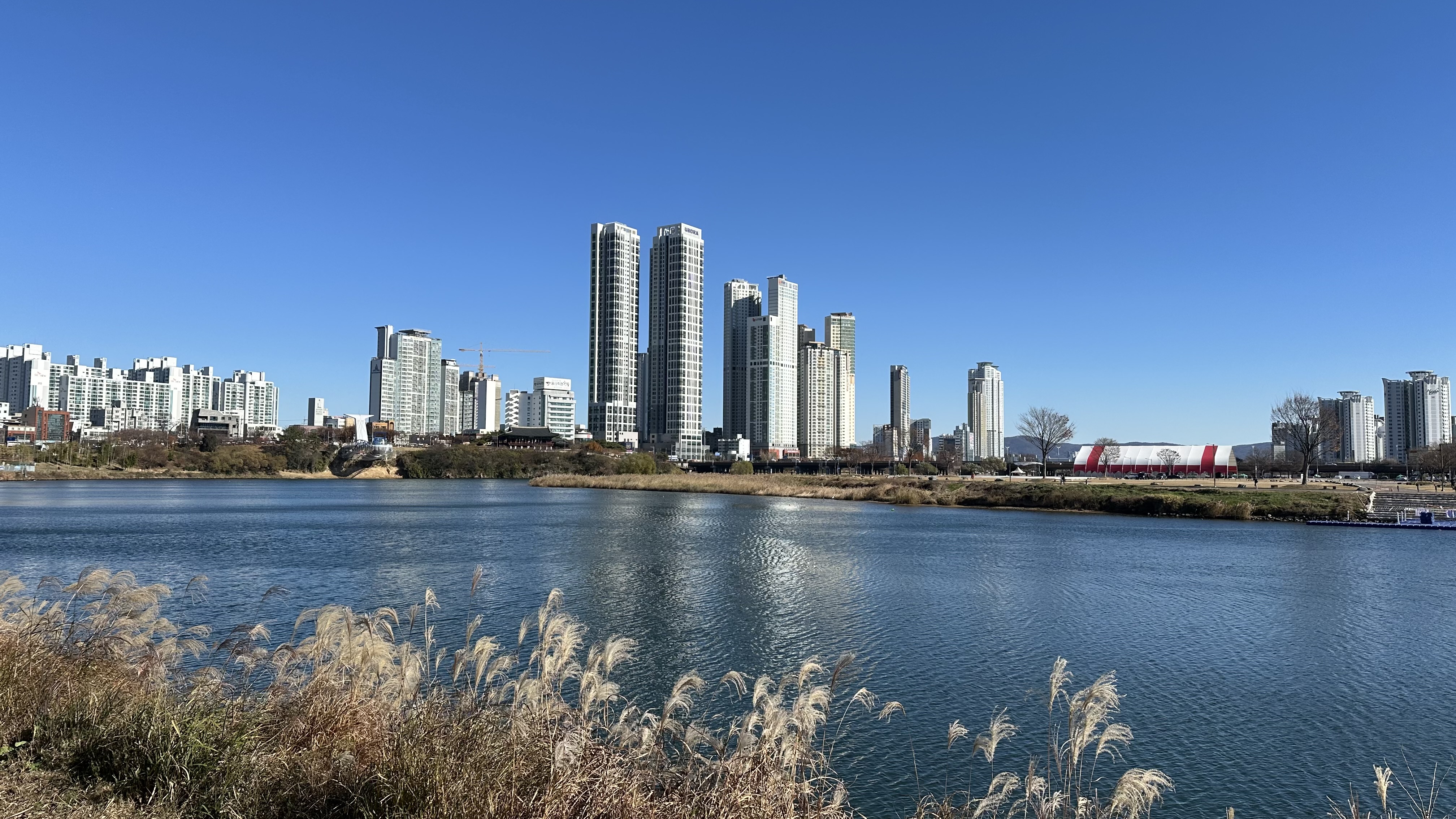
Unlike the Han River, where every possible surface close to the water has been cut into by bridges and roads—everything built for people and cars to move—Taehwagang preserves the nature around it. The man-made things step back one pace, and the green space around the river stands out more. It’s wide open, with no high-rise buildings. I thought running here would feel amazing.
There were many winter migratory birds that came south for warmth. I saw a bird that looked like a duck with a white vertical stripe on its forehead, and when I asked Perplexity, it said it wasn’t a duck—it was a Eurasian coot, a winter migrant.
All my routines settled into a stable phase. Life naturally aligns with the day’s cycle. Maybe because the days are short and it gets cold after sunset. I start walking in the morning and finish trekking before the sun goes down. Almost like a promise, I sleep at 11 and wake at 7. I’m so exhausted that I fall asleep in about three minutes. I sleep ridiculously well—so well it even feels like my personality gets better.
And once the routine became familiar, I even started feeling a bit of boredom. The fun dropped off sharply, and I wondered if I’d even be able to keep trekking from Course 11 onward.
Haeparang Trail Course 8 (Ulsan, Dong-gu, 11.8km)
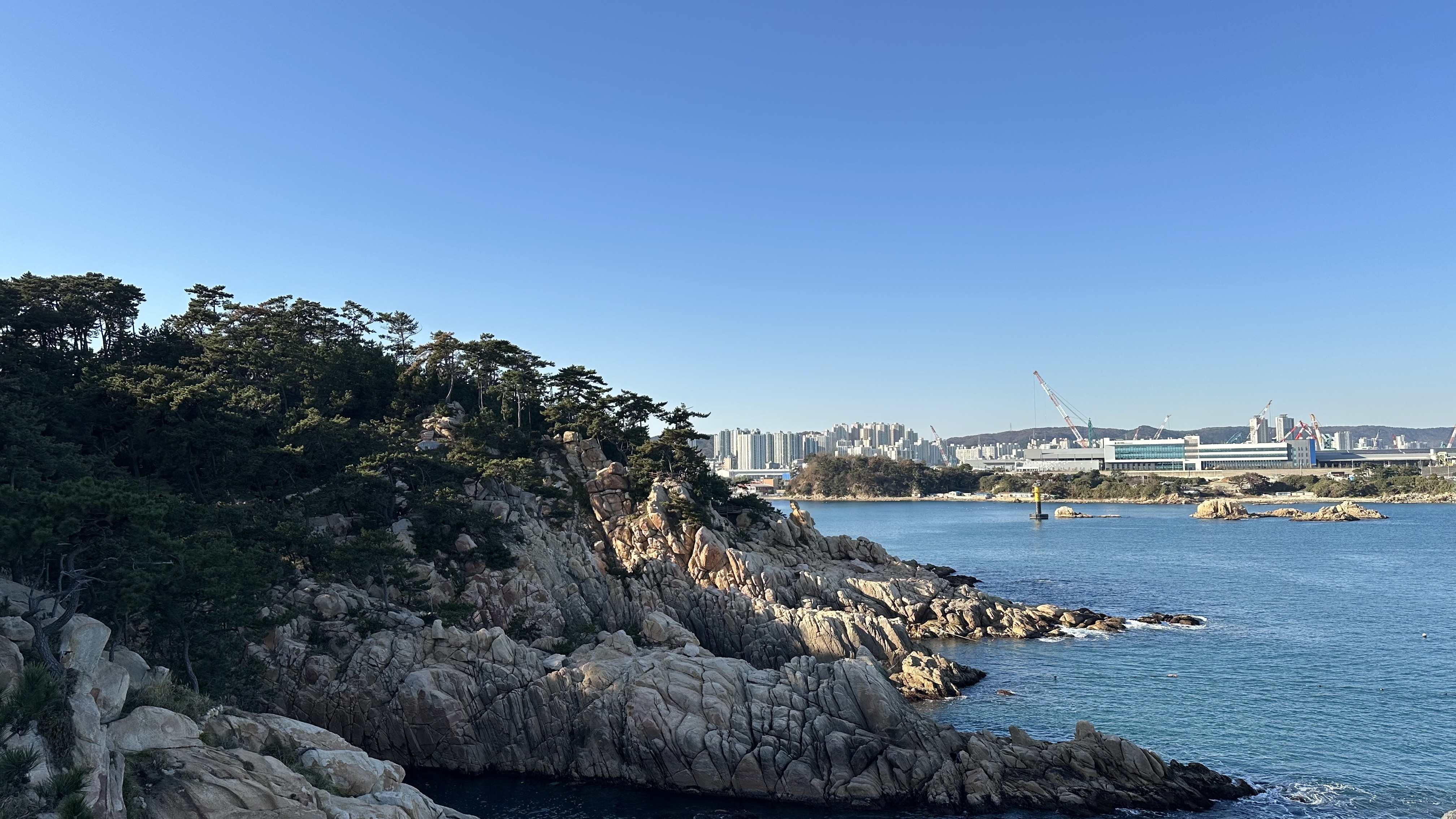
When I moved from Buk-gu to Dong-gu on yesterday’s course, I passed by Hyundai Motor Company’s Ulsan Plant, and it was seriously intimidating. More than a hundred finished Palisades were lined up in formation on the pier, waiting to be loaded onto a massive container ship.
Looking at a map of Ulsan makes you realize Korea is truly a manufacturing-centered country. I learned that in Ulsan’s Nam-gu and Ulju-gun, there are the petrochemical factories around Onsan-eup and Ulsan Port and the Korea Zinc Onsan Smelter; in Buk-gu, the Hyundai Motor Ulsan Plant; and in Dong-gu, Mipo Shipyard and Hyundai Heavy Industries. Apartment complexes and downtown areas grew along this huge industrial zone. Big apartment complexes near the industrial area, with good transportation, had formed at pretty high sale prices. I ended up thinking deeply about industries that provide everything—jobs, housing, infrastructure—and literally support people’s lives.
Haeparang Trail Course 9 (Ulsan, Dong-gu, 19.2km)
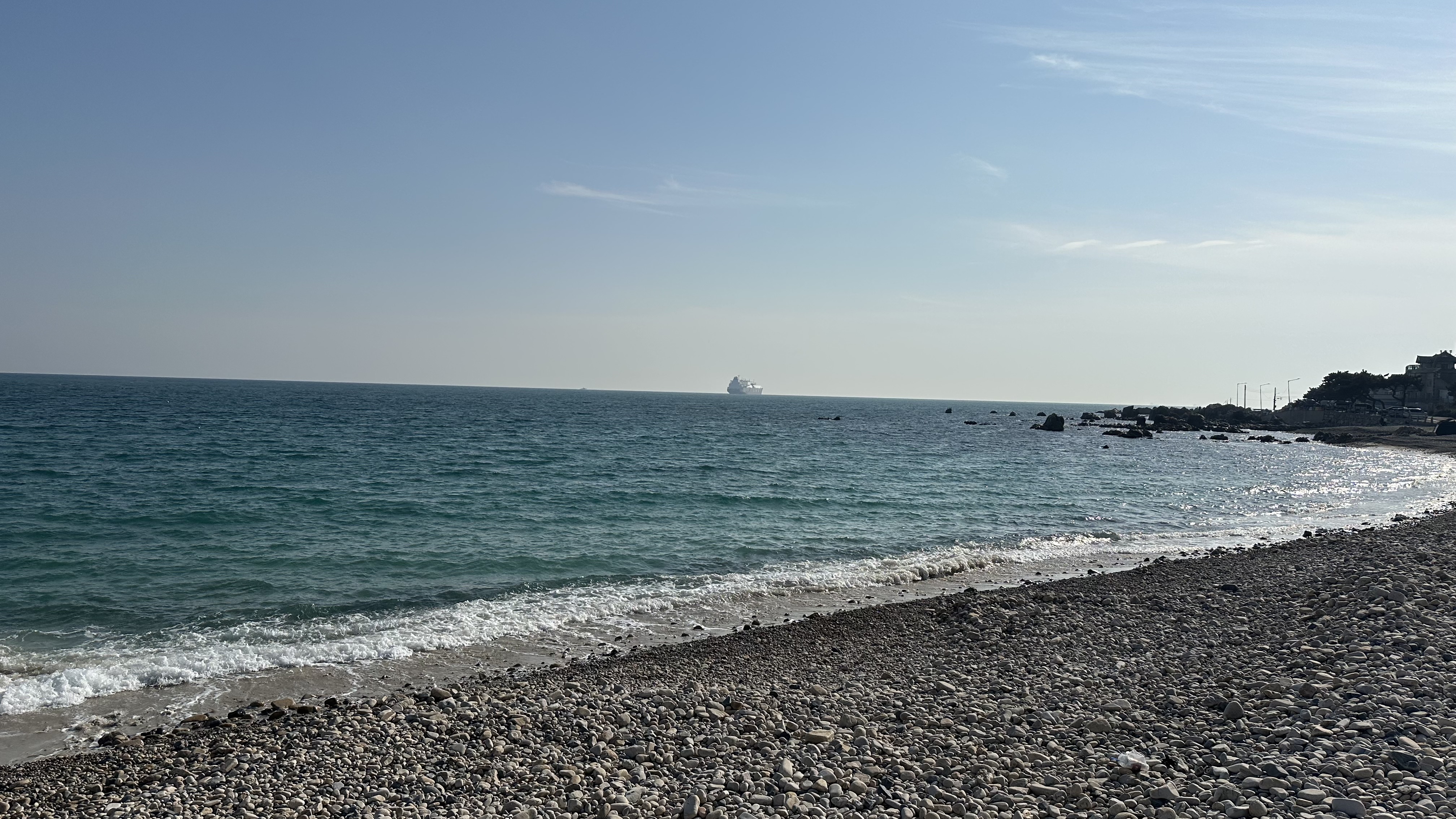
It’s not an exaggeration to say Ulsan’s Dong-gu was built by Hyundai Heavy Industries. Hyundai Heavy Industries built roads, schools, 10,000-unit apartment complexes, a department store, and even hotels around Mipo (where the shipyard is) and the area near Bangeojin (where the headquarters is). Today I could finally get back out to the coast, because Courses 6, 7, and 8 basically detour the entire Ulsan national industrial complex, so you don’t really see the East Sea. Today was the last day of being impressed by the face of this huge industrial city. It was impressive, but I also felt like I’d had enough.
I finished Albert Camus’ The Myth of Sisyphus, which I’d been reading throughout the trip. Through the story of Sisyphus—a figure from myth condemned to push a boulder up a hill endlessly—the book thinks through the idea that human life is fundamentally absurd. It’s not a guidebook about how to live happily, and it’s not a set of moral instructions saying “this is the right way.” Camus doesn’t demand that readers live like the book. And by the book’s own logic, this book itself doesn’t have much meaning in anyone’s life, either.
While reading, I realized I hadn’t started it because I thought “living in revolt is cool and right.” Instead, I think I was reading with an impudent question: whether it’s even possible to keep that attitude of revolt while living an everyday life—something like, “Fine. Let’s see if you can actually live well like that.” Now I think I’ll just reflect on the existential task that remains: living in an absurd world, and what it means to “revolt” inside it.
I used up all the blister-prevention tape I bought when I started the trek. It reduces friction on the sole so it helps prevent blisters in the first place, but it’s also incredibly useful because even after a blister forms, you can tape over it and keep walking. If I had to pick “must-have” items from this trek, I’d say: blister-prevention tape, the Garmin 570 watch (for hiking route features), the NAROO Mask all-season outdoor mask, and the Patagonia Torrentshell 3L jacket (honestly the best windbreaker I’ve ever owned).
Haeparang Trail Course 10 (Gyeongju, Yangnam-myeon, 12.9km)
I crossed the border from Ulsan into Gyeongju. After finishing the trek, I wanted to visit King Munmu’s Underwater Tomb, so I needed to take Gyeongju Bus 150. The interval is 60 minutes, and unless it’s within four stops, you can’t even track where it is. If I were taking a bus in Seoul, thinking “it’s 7 minutes away” would feel like an eternity—but it made me think about how my sense of life’s tempo had slowed down.
Yangnam-myeon in Gyeongju is the smallest fishing village I’d seen so far, and it has almost no conveniences. What are the people like who go out on boats to catch fish, run sashimi restaurants and daegu-tang places, and dry flounder in the sea wind? How much does what they do have to do with AI changing the world? I think about that. “A slow life”—and my viewpoint watching a life like this—feels narrow and condescending, like looking down from above, and it doesn’t feel pleasant. But that unavoidable limitation also feels like my life itself.
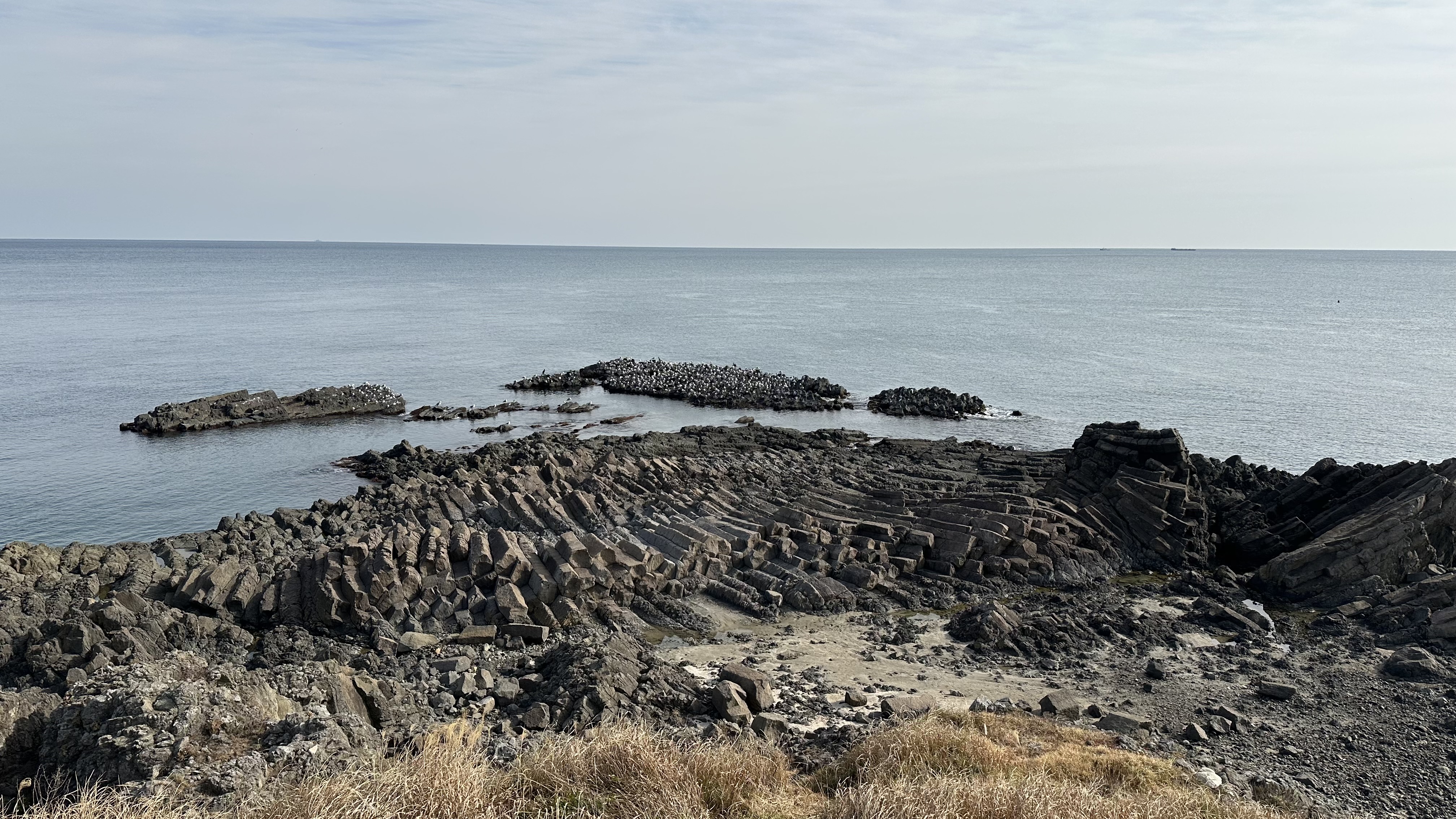
The Yangnam Columnar Joints are a landform created by volcanic activity in the Cenozoic era. From Gyeongju down through Pohang, Yeongdeok, Yeongyang, Uljin, a long stretch of volcanic terrain made of these black rocks is distributed along the coast. This is grouped together as the Gyeongbuk East Coast Geopark. Gangdong Pebble Beach (where Course 10 began) and Naa Beach (the final destination) are made of black stones, sharply contrasting with the more typical white-sand beaches. If I start trekking again from Course 11, I’ll be heading north along this geopark.